Earth and Sky
For the ancient Egyptians, the heavens were not separate from the earth.
The stars provided a celestial template through which life, death, kingship and renewal could be understood.
Temples were aligned to cardinal directions and significant celestial events; the rising of Sirius heralded the annual flooding of the Nile and the renewal of the land; Orion was associated with Osiris, lord of regeneration and the western horizon.
The circumpolar stars, which never set below the horizon, were known as the Imperishable Ones: symbols of eternity and the soul’s enduring journey beyond death.
At the equinox, when day and night stand in balance, the Sphinx faces the rising sun, embodying a profound relationship between earth and sky, landscape and cosmos.
Across Egypt, architecture, myth and astronomy were woven together into a living expression of a universe in which the movements of the heavens were reflected in stone, ritual and the rhythms of human life.
On this journey, star lore is not approached as an abstract subject but as a way of seeing.
We explore how the ancient Egyptians understood themselves as participants in a living cosmos, a world in which river, desert, temple, star and story belonged to a single sacred geography.
Without peace, development gains do not hold. Without peace, delivering humanitarian aid risks further suffering. Without peace, people have more difficulty exercising agency, seizing opportunity, and realizing their full potential. Peace enables trust and provides the foundation for collaboration to solve complex problems. It allows people to look past differences, have difficult conversations, take shared risks, find common ground, and invest in pathways towards a shared future.
Find out more about our work below.
The Temples as Living Worlds
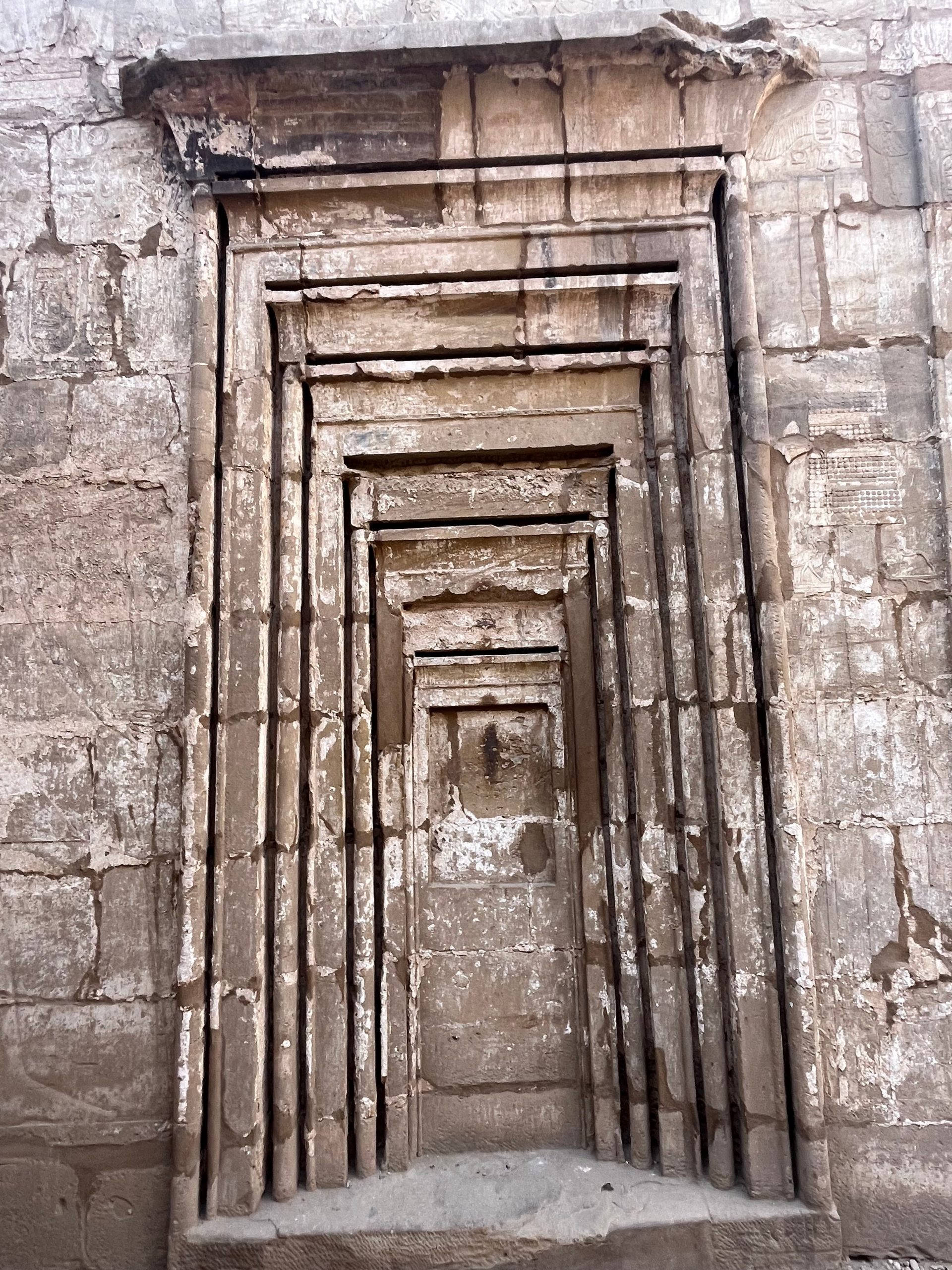
The temples of Egypt were not built as monuments.
They were conceived as living worlds, houses of the gods and gateways between realms. Each temple was understood as a model of the universe:
- the ceiling as sky
- the columns and floor as earth, alive with plant forms
- the inner chambers and crypts as the underworld
There are temples of devotion, such as the Temple of Isis at Philae, the Temple of Osiris at Abydos and the Temple of Horus at Edfu.
There are also mortuary temples, built in honour of the pharaohs to sustain their passage beyond death.
To walk these spaces is not simply to observe them, but to move through a cosmology made of stone.
Aligned to the Heavens
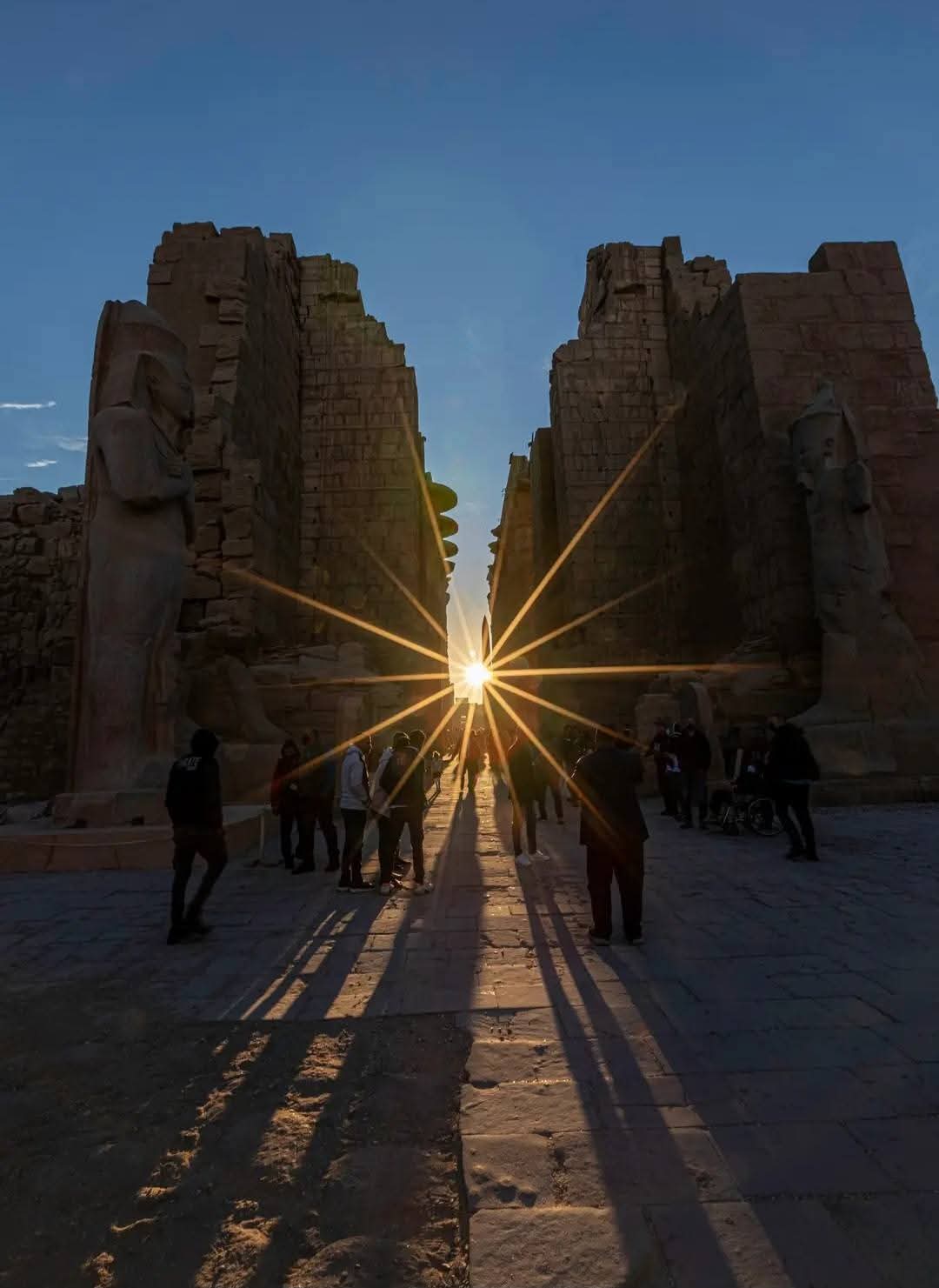
These temples were also instruments of the sky.
Their placement and orientation were not arbitrary, but carefully aligned with celestial bodies and seasonal cycles.
The Great Pyramid is aligned to the four cardinal points with extraordinary precision.
The pyramids have long been associated with Orion, identified by the ancient Egyptians with Osiris, and are uncannily aligned with the pattern of Orion’s Belt.
Internal shafts within the Great Pyramid appear to have been designed to point towards significant stars, linking the pharaoh’s journey to the celestial realm.
This is architecture as astronomy.
Stone as a record of the heavens.
Myth, Sky & River
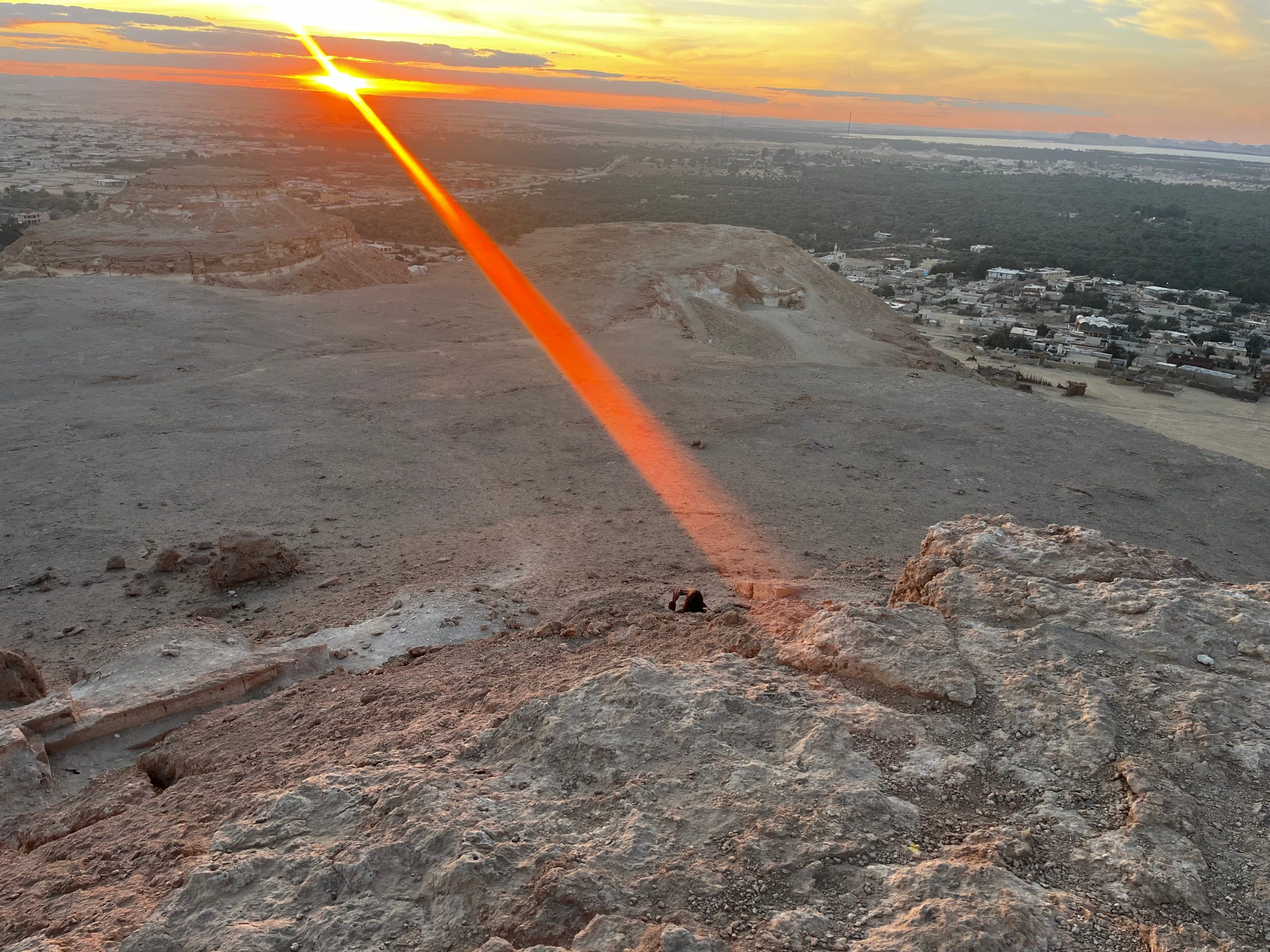
The astronomer priests of ancient Egypt observed the rhythms of both land and sky. They tracked celestial movements as markers of earthly change.
One of the most significant moments was the heliacal rising of Sirius, known to the Egyptians as Sothis.
After disappearing from the night sky for several months, its return to the dawn horizon coincided with the annual flooding of the Nile.
This event was understood through myth.
Isis, grieving the loss of Osiris, wept.
And her tears became the fertile waters that renewed the land.
This story is echoed in the Pyramid Texts at Saqqara, among the oldest sacred writings on Earth, which we encounter within the Pyramid of Unas.
At Dendera, in the Temple of Hathor, we find detailed depictions of the zodiac and planetary deities, another expression of the profound relationship between cosmos, myth and life on Earth.
Landscapes & Living Memory
Landscapes are not passive.
To an open heart and an enquiring mind, they become mirrors, revealing both the heights of spirit and the depths of soul.
They are maps from which we draw meaning.
When we walk them with attention, new perspectives emerge, shaped through encounters with ancestral memory and a world still unfolding.
Past and possibility become present.
Ancient sites, held alongside the rhythms of our daily lives, can open something within us: a living archive.
We are not separate from the stories held within the land.
We are both witnesses to the Earth’s past and participants in its becoming.
Travel, then, is not escape. It is a dynamic exchange between place, time and the stories we choose to carry forward; between who we have been and who we are becoming.
Feeling the Summons
To walk in Egypt is to move within a dimension where sky, story and stone are not separate.
And where, if we listen closely, something within us begins to remember how they once belonged together, as part of an unbroken whole.
Our journeys begin with relationship: listening to the stories held within the land, the sky and the living world.